
The Identity-Weaving Power of Attachment
There are certain relationships in our lives that shape us, for many different reasons: maybe they change us for the better, maybe for the worse; maybe they’re uplifting and grounding, maybe they’re derailing and painful.
I bet you, like me, can name at least a few people, animals, places, times or things, that changed the course of your life; stuck with you, influencing you, even at those times you weren’t aware of it - words they said, the way they lived, the things they taught you. They became part of the rhythm of who you are, part of how you exist in the world.
For me, it was the mother of a university friend, an ex-boyfriend, a therapist, a teacher (all now gone from my life), my son, and my dog. My son and my dog are whole learning experiences that I never expected - and I talk about Lyla later.
So when those relationships begin to shift, even slightly, in whatever way that may be, something deep inside us responds. Our sense of self changes: parts of us can only be let go, noticed, reinforced, or changed.
We are relational beings. We identify ourselves by our relationships with others, with people, animals, things, places, and labels – and particularly the ones we have strong attachments to. When these attachments change, our inner (and often unconscious) sense of identity feels it first.

Make it stand out
Even before loss occurs, even before anything looks different from the outside, your inner world has already started rearranging itself, like a silent recalibration, a subtle reorientation of who you are and who you will soon be - a sense of something changing even if you don’t yet know exactly what that might be.
This, too - when the loss is felt with sadness, fear or regret - is a kind of grief.
Why Change Feels Like Loss - Even When It Isn’t Always Wrong For Us
Most people think grief begins with endings, but grief actually begins with any kind of change – even if you want the change, even if it is a good change.
We feel uncomfortable with change not simply because we’re set in our ways, but because change threatens our identity; our attachments give us identity and belonging, and the predictability of our interactions can be a real comfort.
Threatened identity – is that a bit extreme?
Why Does Our Identity Feel Threatened With Change and Loss?
This is the thing that kept me stuck for years – even in a place I didn’t want to be – and one many of the people I work with identify with. It’s usually realised with wide-eyed disbelief that accompanies the words ‘That makes total sense…why have I never thought of it that way?’...
‘If this isn’t who I am anymore…who am I?’
And it can feel pretty scary.
Attachment is about identity continuity, the version of you that feels real in this moment; the version of you that you’ve been for so long that anything different feels alien and unknown. Even those parts of you that you wish were different or gone have become so familiar that to lose them is still losing yourself. This is what we fear – that losing a part of us means losing all of us: as though we would fade away and cease to be.
In Buddhism there is a teaching that, when I first heard it, made me felt safe. It was described by Eckhart Tolle in The Power of Now, and changed my fear into a peace borne of the new understanding that I was not my past:
“Death is a stripping away of all that is not you.
The secret of life is to ‘die before you die,’ and find that there is no death”.
The key here is the not you part: what it means is that each moment of presence, acceptance of what is, and letting go of the parts of you clinging to who you used to be, dissolves the old self, so a truer one can emerge.
Yes; as you lose something, pat of you dies. But it is not all of you, and it is not your life - it is simply your life changing.
I will write more about this next week: the fear of loss is balanced by the gifts that emerge – when you allow them to.
The Fear Beneath the Fear
The fear of change is rarely about the change itself. It’s actually about what that change will ask of us: the decisions we’ll have to make, the emotional hurt we’ll have to deal with.
Change forces us to let go of old roles and step into unfamiliar versions of ourselves, it asks us to release identities we’ve worn for years and even face memories we’ve buried and emotions we avoided so that we can release them, and it means, often painfully, to imagine a future we didn’t choose.
Your Nervous System Responds Before You Do
When change is sensed, your nervous system begins to adjust: you become hyper-aware of small details that you previously missed; you fear the anticipated pain - and your reaction to it - before it arrives; you begin to imagine future scenarios in the hope that you can prepare, which makes you cling more tightly to what feels safe.
Preparing for loss often feels like experiencing loss, which is why identity-shifting seasons - when your mourning becomes part of life before the event, then during and after - can become emotionally exhausting.
🌼 A Note From My Writing Desk: Lyla, Change & The Self I’ve Been
As I write My Last Walk With You, I’m remembering the ways Lyla has changed me, the things I learned about myself.
Lyla hasn’t gone yet. She’s still here, still vitally herself, still the dog who’s woven herself into the fabric of my everyday life for 11 years. But she’s sleeping more, stiff in the hips after her snoozes, slower to greet us at the door. Some days she doesn’t greet us at all, but raises her head when we finally discover who’s bed she’s sleeping on.
This is the glimpse of future grief for all my family.
And for me personally, it will be the loss of a teacher: Lyla was a rescue, and taught me so much about myself: she is another of my mirrors, second only to my son. She was another chapter in my learning to look inward, to change my reactions, to notice my power and my ability to create safety - for her, my son and myself.
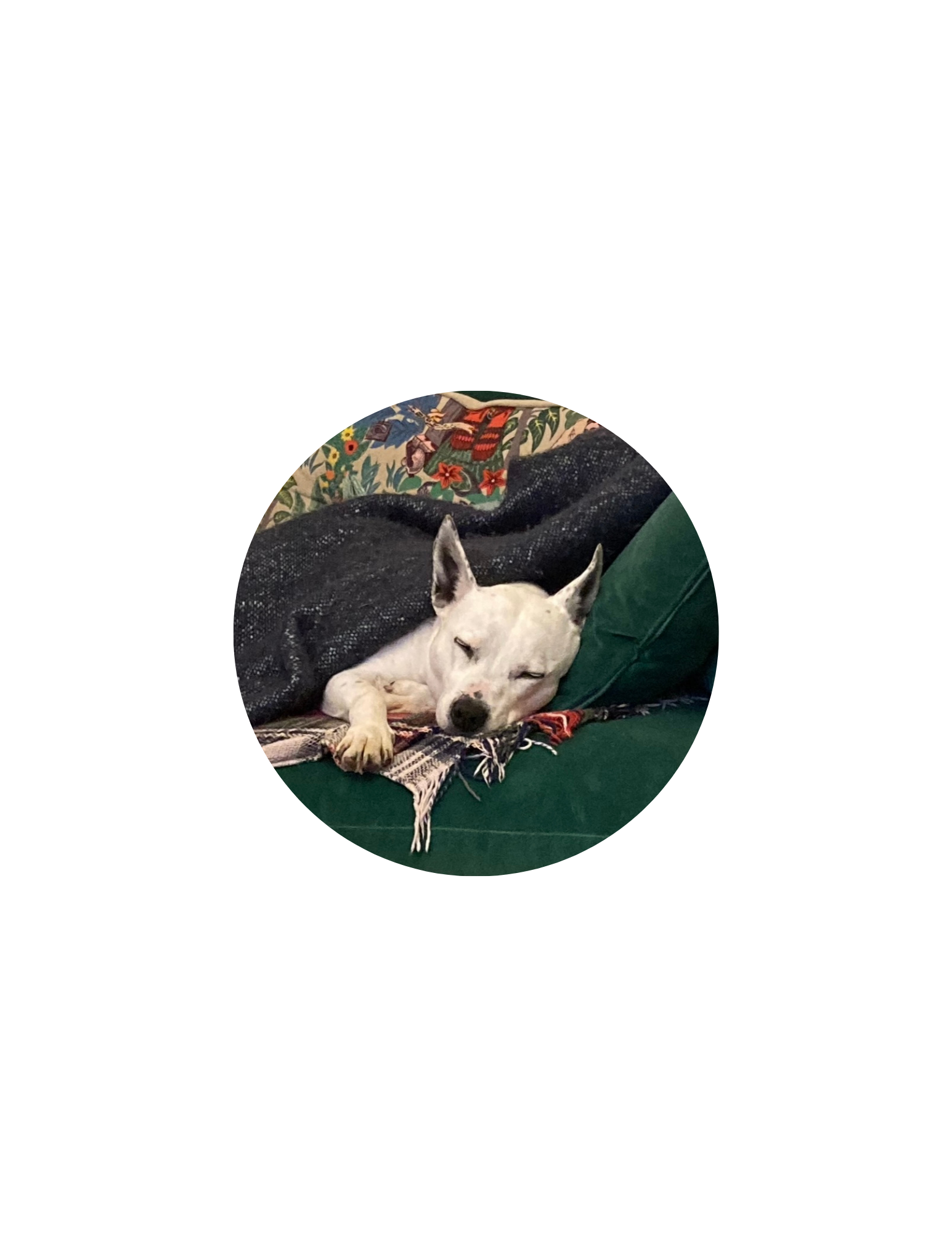
With her, I became a kinder person: one who saw through her behaviour to her wounding, and at the same time, through my own.
Over the last 11 years I’ve found comfort in the sound of her paws as she lollops down the stairs, and in the heat of her when she snuggles into the back of my legs as we sleep.
The changes she’s seen me through over the last 11 years of my life have been her whole life, and she’s been a huge part of it. She was sent to me during a time of unending emotional pain so I could become who I am now. And when she goes, I will be losing my right-hand woman. I’m waiting now, and don’t fully know how it will affect me.
Closing
If you’re fearing change, even gentle, natural change, please know you’re not simply resisting the inevitable, and you’re not weak.
You’re attached: you’re human, anticipating the loss of something that’s been a connection, a consistent presence, and something that means something precious to you.
So, when the shape of your life shifts, even slightly, and your identity begins to rearrange itself in response, be gentle with he person you’re, once again, learning to become.
Journaling Prompts for You
Use any of these to explore your own shifting sense of self:
1. What version of me is afraid of this change?
2. Who have I been because of the relationships that shaped me?
3. What identity am I grieving, even if nothing has ended?
4. Where do I feel the fear of change in my body?
5. What new version of myself might be emerging through this?